What is a headache?
Headache is one of the most common symptoms reported to clinicians and often causes a great amount of concern to patients. The vast majority of headaches result from benign conditions.1
These points should be addressed to help classify the headache.1
- Type of pain.1
Many patients suffer from more than one type of headache. This may result from different etiologic factors or may represent a change in character of a chronic headache disorder.
- Temporal profile of pain.1
Acute-onset headaches of severe intensity occurring in a patient without previous history of similar headaches may suggest an organic etiology. The timing of onset and association with sleep or hormonal cycles may be helpful in diagnosis.
- Characteristics of pain.1
The location, duration, and quality of pain should be carefully evaluated. Location may be diffuse, either unilateral or bilateral, or localized to specific structures in the head and neck. Vascular headaches produce a throbbing pain; constant pain results from myogenic or traction headaches.

*INCORRECT USE COULD BE HARMFUL
Different headaches, different causes.

*INCORRECT USE COULD BE HARMFUL
Rest assured, if your headache is occasional, mild, and doesn't interfere with your daily activities, it's likely benign.2
If rest doesn't relieve the pain, over-the-counter medications2 like Doliprane 1000, containing paracetamol, can provide relief. Dosage should be adjusted based on weight and other factors, and it's important to follow the instructions. If you have any doubts, consult your pharmacist3
If your headaches are becoming more frequent, intense, or if they're worsening, it's important to see your doctor. They can help determine the underlying cause and recommend appropriate treatment.4
Benign headaches and their triggers.

*INCORRECT USE COULD BE HARMFUL
Headaches occur for a variety of reasons. Here are some of the most common triggers:5
- Irregular lifestyle: skipped meals, changes in sleep or lack in sleep, poor posture.2
- Psychological state: Stress and Headaches The most common headache trigger is stress, which releases certain chemicals in the brain that cause vascular changes. Anxiety, worry, shock, depression, excitement, and mental fatigue can cause stress-induced headaches.5
- Alcohol consumption and smoking. 6
- Certain foods: Processed meat, Aged cheeses, chocolate.7
- Poor posture causing muscle tension in the neck and head, especially in a sitting position...6
- Hormonal changes, especially in women: menstruation.5
- Sensory stimuli: Bright or flickering lights, excessive or repetitive noises, odors, fragrances..8
- Excessive use of pain medication.9

*INCORRECT USE COULD BE HARMFUL
A Common Headache We All Know

*INCORRECT USE COULD BE HARMFUL
Many of us experience headaches at the end of the day. These are often linked to stress, anxiety, or fatigue, hence the name "tension headache." Whether episodic or chronic, it's the most common cause of primary headaches. 10 The main symptoms include:
- A constant, moderate, and diffuse pain, with a sensation of pressure on both sides of the head.10
- Dull, pressure-like (not throbbing)11
- All over (not just in one point or one side)11
- Not accompanied by nausea or vomiting.11
- It may be triggered by or get worse with stress, fatigue, noise, or glare.11
A tension headache is considered chronic if it lasts more than 15 days a month.10 In such cases, it's recommended to consult a doctor who can advise on appropriate measures and potential over-the-counter treatments.10
Actual Migraine


*INCORRECT USE COULD BE HARMFUL
People often use the term "migraine" loosely, sometimes referring to a simple headache. A migraine, however, is a neurological disorder.12 To put it simply, Researchers do not yet understand all the factors that cause migraines. It appears they may be caused in part by changes in the level of a body chemical called serotonin. Serotonin plays many roles in the body and affects blood vessels. When serotonin levels are high, blood vessels constrict (shrink). When serotonin levels fall, the blood vessels dilate (swell). This swelling can cause pain or other problems. Some research suggests there could be a heredity factor for migraines13, main symptoms include:
- Migraine is an intense pounding headache that can lasts from a few hours to days, with pain that intensifies with physical activity, sometimes accompanied by nausea.13
- A throbbing pain, moderate to severe, usually on one side of the head,12 around the temple or above the eye.13
- Sensitivity to light, sound, or smell.13
A person is considered to have migraines after experiencing at least five attacks in their lifetime, with at least two of the above symptoms present during each attack.14
Headaches Associated with Underlying Conditions15
Various diseases (of varying severity), requiring medical attention, can cause headaches. Some of these conditions include:
- Infectious diseases (sinusitis, flu, COVID-19),
- high blood pressure,
- Eye diseases, particularly glaucoma,
- Intracranial diseases.
Certain symptoms should prompt you to seek medical advice.
Headaches are one of the most common ailments, often benign and effectively treated with paracetamol when taken correctly. 2 Increasing the dosage will not make it go away faster! In fact, you risk causing serious liver damage.3 However, if the intensity or duration is unusual, or if you experience frequent headaches, consult your doctor.2
- Clinical Method Book. Headache. Available at: Headache - Clinical Methods - NCBI Bookshelf (nih.gov), Last Accessed: 10/10/2024.
- Clevland Clinic. Headache. Available at: Headache: What It Is, Types, Causes, Symptoms & Treatment (clevelandclinic.org), Last Accessed: 10/10/2024.
- Egyptian Drug Authority (EDA) Doliprane approved leaflet. Date of approval: 04/01/2021.
- MayoClinic. When to see a doctor. Available at: Headache When to see a doctor - Mayo Clinic, Last Accessed: 10/10/2024.
- Mountsinai. Headache Triggers and Tips. Available at: Triggers of Headaches | Mount Sinai - New York, Last Accessed: 10/10/2024.
- NHS. 10 headache triggers. Available at: 10 headache triggers - NHS (www.nhs.uk), Last Accessed: 10/10/2024.
- Penn Medicine. Foods That Can Trigger Headaches. Available at: Foods That Can Trigger Headaches - Penn Medicine, Last Accessed: 10/10/2024.
- Association of Migraine Disorders. Certain Stimuli May Provoke A Headache. Available at: Triggers of Migraine | What Provokes A Headache (migrainedisorders.org), Last Accessed: 10/10/2024.
- Mayoclinic. Medication over use. Available at https://www.mayoclinic.org/... headache/symptoms-causes/syc-20377083 , Last Accessed: 10/10/2024.
- Clevlandclinic. Tension headache. Available at: Tension Headache: What It Is, Causes, Symptoms & Treatment (clevelandclinic.org), Last Accessed: 10/10/2024.
- Medline plus. Tension Headache. Available at: Tension headache: MedlinePlus Medical Encyclopedia, Last Accessed: 10/10/2024.
- Statpearls. Migraine Headache. Available at: Migraine Headache - StatPearls - NCBI Bookshelf (nih.gov), Last Accessed: 10/10/2024.
- FamilyDoctors.Migraines. Available at: What Causes Migraines? - Migraine Symptoms | familydoctor.org, Last Accessed: 10/10/2024.
- Arnold M. Headache classification committee of the international headache society (IHS) the international classification of headache disorders. Cephalalgia. 2018;38(1):1-211.
- Mayoclinic. Headache causes. Available at: Headache Causes - Mayo Clinic. Last Accessed: 10/10/2024.
Articles and tips on pain

How to Relieve Dental Pain: Effective Solutions for Toothaches
This is one of the most frightening and sometimes most painful pains: dental pain. It can range from simple discomfort to such suffering that it impacts our daily lives. Be careful, we are going to talk about cavities, toothache and dental abscess. But also relief. Ready?








Our products
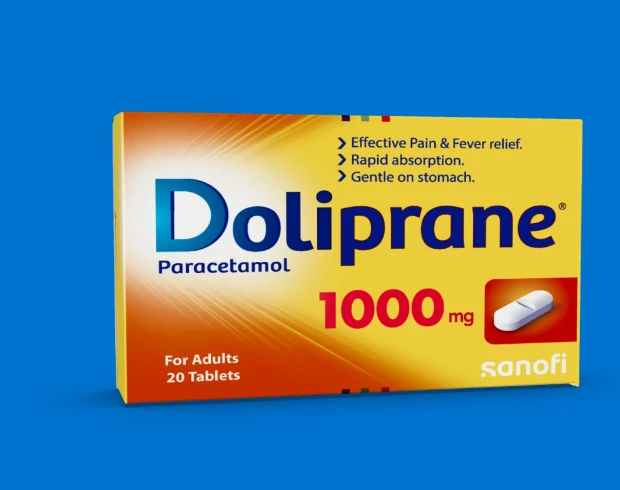
Doliprane Tabs 1000 mg
Oblong, 1000 mg Paracetamol tablet.1
Doliprane is indicated for the symptomatic treatment of clinical conditions requiring an analgesic and/or an antipyretic such as:1
- Symptomatology associated with flu or hyperthermia related to infection
- Fever reaction to vaccination
- Headaches and migraines
- Toothache, earache, period, traumatic, muscle, joints or osteoarthritic pain
- Analgesic before and after surgical procedures
Approved by Egyptian Drug Authority: HF0253OA3253/022025 Invalidation date: 20/02/2027. Kindly report any violated online promotional, educational and awareness material not having this message to The General administration for Regulation of Marketing & Advertising Materials at: www.edaegypt.gov.eg

HF0253OA3253/022025
20/02/2027