Fever: our natural defense mechanism
Our normal body temperature is between 36°C and 37.2°C. It fluctuates according to individuals, age, physical activity, ambient temperature, and in women during their menstrual cycle. It can sometimes exceed 37.5°C to keep the body functioning properly.1
Why do I have a fever?
Let's find out!
Fever is not a disease, but rather one of its symptoms.1 Most often, its cause is benign, like the common cold.2 Fever results from the activation of our body's immune defenses against a virus, bacteria or parasites.3 A fever in adults is defined as a temperature above 38°C. This is when our body activates its defense mechanism.1

*INCORRECT USE COULD BE HARMFUL
What are the symptoms of fever?
When the body activates its natural defenses, certain signs may indicate a rise in temperature: fatigue, irritability, increased heart rate, shivering and trembling. These signals should be confirmed by taking the temperature.1
As soon as the body no longer needs to produce substances to defend itself, temperature and heart rate drop.1 The body may sweat to help eliminate toxins and regulate temperature.7
There are many ways to take my temperature.
Which is the most reliable?
I took the temperature by:
Normal body temperature ranges from:
Rectal route (by the rectum)
36.6 to 38°C
Oral route (by the mouth)
35.5 to 37.5°C
Tympanic route (by the ear)
35.8 to 38°C
Forehead strip thermometers or infrared thermometers can be used, but the measurement is not accurate, as it can be distorted by external elements such as sweat, air.9
How can I lower my fever?
In many cases, fever spikes are harmless. Some simple steps can help you keep up with it, such as10
- Drink plenty of fluids, as fever-induced perspiration can lead to dehydration.
- Turn down the heater and avoid covering up too much to release body heat.
- Relax and rest.
It's usually only when the temperature exceeds 38.5°C that paracetamol can be considered.11

*INCORRECT USE COULD BE HARMFUL
I'm worried about my fever. Should I seek medical attention right away?
While you can relieve fever with over-the-counter treatments, some situations require medical attention sooner or later, depending on the symptoms.13

*INCORRECT USE COULD BE HARMFUL
I should consult my doctor immediately:
- If symptoms persist for more than 3 days despite taking paracetamol, if they worsen or are accompanied by any other worrying or unusual symptoms.14
- If the fever affects a person with a compromised immune system15 or a trip to an exotic country.16
- If the fever affects a person with cardiac or respiratory insufficiency,17 or an elderly person.18
- If the fever is associated with urinary pain, moderate headaches or respiratory discomfort.14

*INCORRECT USE COULD BE HARMFUL
I should call emergency services in the following cases
When you consult your doctor about a fever, it's important to clarify whether it's accompanied by any other signs, and to explain each symptom. This will help you get the right diagnosis and the most appropriate treatment.
To wrap up
In many cases, fever is not necessarily a symptom of serious illness, and taking paracetamol correctly can help you manage it. Under no circumstances should you think “the more I take, the faster the fever will break”. And of course, if in doubt, consult your doctor.10
- Clevlandclinic.Fever. Available at: https://my.clevelandclinic.org/health/symptoms/10880-fever, Last Accessed: 01/10/2024.
- Mayoclinic.Fever. Available at: https://www.mayoclinic.org/diseases-conditions/fever/symptoms-causes/syc-20352759, Last Accessed: 01/10/2024.
- McGregor AC, Moore DA. Infectious causes of fever of unknown origin. Clinical Medicine. 2015 Jun 1;15(3):285-7.
- HealthLink BC. Healthrelated illness. Available at: Heat-Related Illnesses | HealthLink BC, Last Accessed: 01/10/2024.
- PennMedecine. Fever. Available at: https://www.pennmedicine.org/for-patients-and-visitors/patient-information/conditions-treated-a-to-z/fever, Last Accessed: 01/10/2024.
- Stat of Pearls.Physiology, fever. Available at: Physiology, Fever - StatPearls - NCBI Bookshelf (nih.gov), Last Accessed: 01/10/2024.
- Clevlandclinic. Sweat. Available at: What Is Sweat & Why Do We Sweat? (clevelandclinic.org), Last Accessed: 01/10/2024.
- British Colombia link. How to take a temperature. Available at: How to take a temperature: Children and adults | HealthLink BC, last Accessed: 01/10/2024.
- Clevlandclinic. Most AccurateThermometers for Kids. Available at: Most Accurate Thermometers for Kids (clevelandclinic.org), Last Accessed: 01/10/2024.
- Clevlandclinic. 5 Methods to Safely Break a Fever. Available at: Diagnosis and Treatment of the Flu - Cleveland Clinic, Last Accessed: 01/10/2024.
- Mayoclinic. Fever treatment: Quick guide to treating a fever. Available at: Fever treatment: Quick guide to treating a fever - Mayo Clinic, Last Accessed: 01/10/2024.
- Egyptian Drug Authority (EDA) Doliprane approved leaflet. Date of approval: 04/01/2021.
- Better Health. Fever. Available at: Fever - Better Health Channel, Last Accessed: 01/10/2024.
- OSF. What’s considered a fever and when to see a doctor. Available at: What’s considered a fever and when to see a doctor | OSF HealthCare, Last Accessed: 01/10/2024.
- Hackensack Meridian Health. When to Seek Care for a Fever. Available at:https://www.hackensackmeridianhealth.org/en/healthu/2020/09/17/when-to-seek-care-for-a-fever. Last Accessed: 24/12/2024.
- Mayoclinic. Malaria. Available at: https://www.mayoclinic.org/diseases-conditions/malaria/symptoms-causes/syc-20351184, Last Accessed: 01/10/2024.
- Guihur A, Rebeaud ME, Fauvet B, Tiwari S, Weiss YG, Goloubinoff P. Moderate fever cycles as a potential mechanism to protect the respiratory system in COVID-19 patients. Frontiers in Medicine. 2020 Sep 11;7:564170.
- Medline plus. Aging changes in vital signs. Available at: Aging changes in vital signs: MedlinePlus Medical Encyclopedia, Last Accessed: 01/10/2024.
- American College of Emergency Physicians. Fever. Available at: Fever — Know When to Go to the ER (emergencyphysicians.org), Last Accessed: 01/10/2024.

Our products
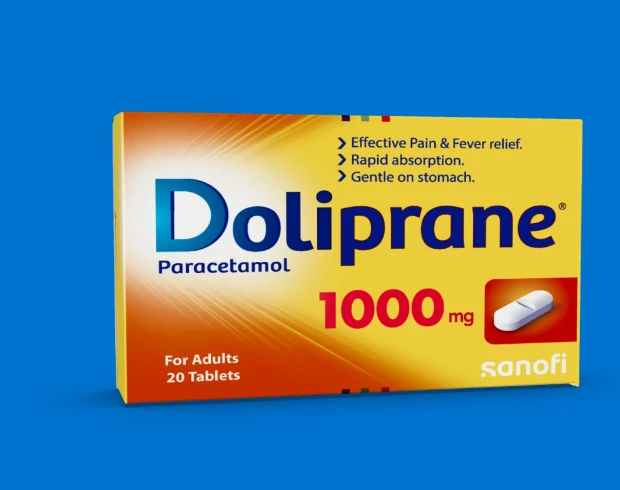
Doliprane Tabs 1000 mg
Oblong, 1000 mg Paracetamol tablet.1
Doliprane is indicated for the symptomatic treatment of clinical conditions requiring an analgesic and/or an antipyretic such as:1
- Symptomatology associated with flu or hyperthermia related to infection
- Fever reaction to vaccination
- Headaches and migraines
- Toothache, earache, period, traumatic, muscle, joints or osteoarthritic pain
- Analgesic before and after surgical procedures
Approved by Egyptian Drug Authority: HF0253OA3606/052025 Invalidation date: 14/05/2027. Kindly report any violated online promotional, educational and awareness material not having this message to The General administration for Regulation of Marketing & Advertising Materials at: www.edaegypt.gov.eg

HF0253OA3606/052025
14/05/2027