Flu-like illness or the flu? Let's debunk the myths about the virus!
A flu-like illness is a sign of the beginning of the flu... WRONG.
It is not related to the flu because it is not caused by the flu virus, but number of different viruses.1
Its symptoms resemble those of the flu, hence the name, but they are much less severe, as in most cases you can continue your daily activities.1
So, what are the symptoms of a flu-like illness?
They resemble the flu, but are much milder. You may experience fatigue, a slight fever, headaches, a runny eyes and nose. These symptoms are sometimes accompanied by cough or mild body aches. A flu-like illness usually resolves spontaneously in less than 10 days. If not, consult your doctor.2

*INCORRECT USE COULD BE HARMFUL
True or false? The common cold is highly contagious. TRUE.3
It is caused by various types of respiratory viruses, which are very easily transmitted through the air, especially when sneezing.3
"Oh, it's just a cold, it's nothing." Yet, the common cold is a "real illness."4
A cold is a contagious upper respiratory infection that affects your nose, throat, sinuses and windpipe (trachea) that’s why nasal congestion appears.2
"Stuffy nose symptoms" Mary explains.
That's right, a stuffy or runny nose is the most common symptom. When the mucous membrane is irritated, it swells and produces more fluid. This is what we commonly call mucus.
Typically, a common cold starts with a sore throat and sometimes a mild fever, lasting 1 to 3 days.4
Only then does the nose become stuffy and runny.4
A cough may also appear.4
These symptoms can last 7 to 10 days.4
Although it usually resolves on its own 4,
complications such as sinusitis or otitis can occur in some cases, Sometimes, children may develop complications from bacteria, suchas an ear infection or pneumonia.2
Consult your doctor if necessary.
Pay close attention to children!
Young children can experience 6 or more common colds per year.5 So, be aware!
I'm doing my part to stop the spread of germs.
The common cold and flu are contagious because respiratory viruses spread very easily through coughing and sneezing, and indirectly through contact with contaminated surfaces.2
To prevent transmission, it is important to follow these simple guidelines:

*INCORRECT USE COULD BE HARMFUL
How can I treat myself?
True or false? Antibiotics are necessary. FALSE.8
There is no need to use antibiotics for either adults or children.8
Indeed, antibiotics cannot treat infections caused by viruses.8
The common cold and flu will resolve on their own within 10 days.8
To relieve nasal congestion, nasal saline rinses followed by blowing your nose are recommended.9
For pain or fever, you can take medications containing paracetamol, such as Doliprane 1000.10

*INCORRECT USE COULD BE HARMFUL
Beware of overdosing!
Do not combine with other medications containing paracetamol to avoid the risk of overdose. An overdose of paracetamol can cause irreversible liver damage.10
To wrap up
Colds and the flu, while generally mild, are highly contagious and can be prevented by simple measures.1
If, during the few days that the illness lasts, symptoms become difficult to tolerate, taking Doliprane 1000 can help you get through this difficult period.10
If your fever persists for more than 3 days or worsens, consult your doctor.10
- CDC. Common Cold. Available at: Cold Versus Flu | Influenza (Flu) | CDC, Last Accessed: 13/10/2024.
- Clevland clinic. Common Cold. Available at: https://my.clevelandclinic.org/health/diseases/12342-common-cold, Last Accessed: 13/10/2024.
- American Lung Association. What Is a Cold? Available at: https://www.lung.org/lung-health-diseases/lung-disease-lookup/facts-about-the-common-cold, Last Accessed: 13/10/2024.
- Mayo clinic. Common Cold. Available at: Common cold - Symptoms and causes - Mayo Clinic, Last Accessed: 13/10/2024.
- Cedars Sinai. Common Cold in Children. Available at: https://www.cedars-sinai.org/health-library/diseases-and-conditions---pediatrics/c/common-cold-in-children.html,Last Accessed: 13/10/2024.
- CDC. Healthy Habits: Coughing and Sneezing. Available at: Healthy Habits: Coughing and Sneezing | Water, Sanitation, and Environmentally Related Hygiene (WASH) | CDC, Last Accessed: 13/10/2024.
- CDC. Improving Ventilation in Your Home. Available at: https://www.cdc.gov/coronavirus/2019-ncov/prevent-getting-sick/improving-ventilation-home.html, Last Accessed: 13/10/2024.
- Mayo Clinic. Common Cold. Available at: https://www.mayoclinic.org/diseases-conditions/common-cold/diagnosis-treatment/drc-20351611. Last accessed: 13/10/2024.
- Cleveland Clinic. Nasal Congestion (Stuffy Nose): What It Is, Causes & Treatment. Available at: https://my.clevelandclinic.org/health/diseases/17980-nasal-congestion. Last accessed: 13/10/2024.
- Egyptian Drug Authority (EDA). Doliprane tablets 1000mg. Approved leaflet date: 04/01/2021.

Our products
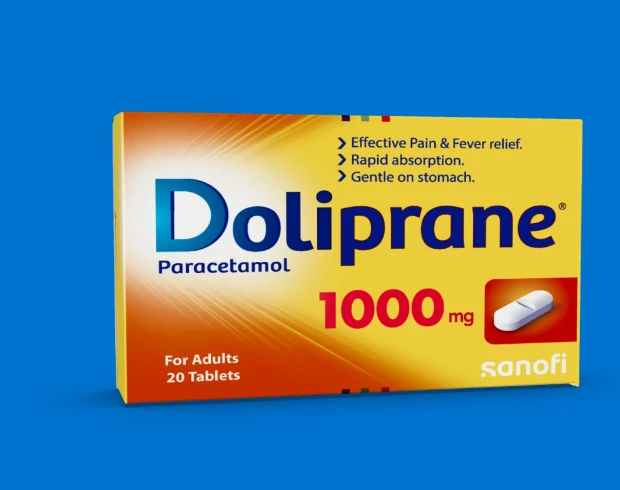
Doliprane Tabs 1000 mg
Oblong, 1000 mg Paracetamol tablet.1
Doliprane is indicated for the symptomatic treatment of clinical conditions requiring an analgesic and/or an antipyretic such as:1
- Symptomatology associated with flu or hyperthermia related to infection
- Fever reaction to vaccination
- Headaches and migraines
- Toothache, earache, period, traumatic, muscle, joints or osteoarthritic pain
- Analgesic before and after surgical procedures
Approved by Egyptian Drug Authority: HF0253OA3253/022025 Invalidation date: 20/02/2027. Kindly report any violated online promotional, educational and awareness material not having this message to The General administration for Regulation of Marketing & Advertising Materials at: www.edaegypt.gov.eg

HF0253OA3253/022025
20/02/2027